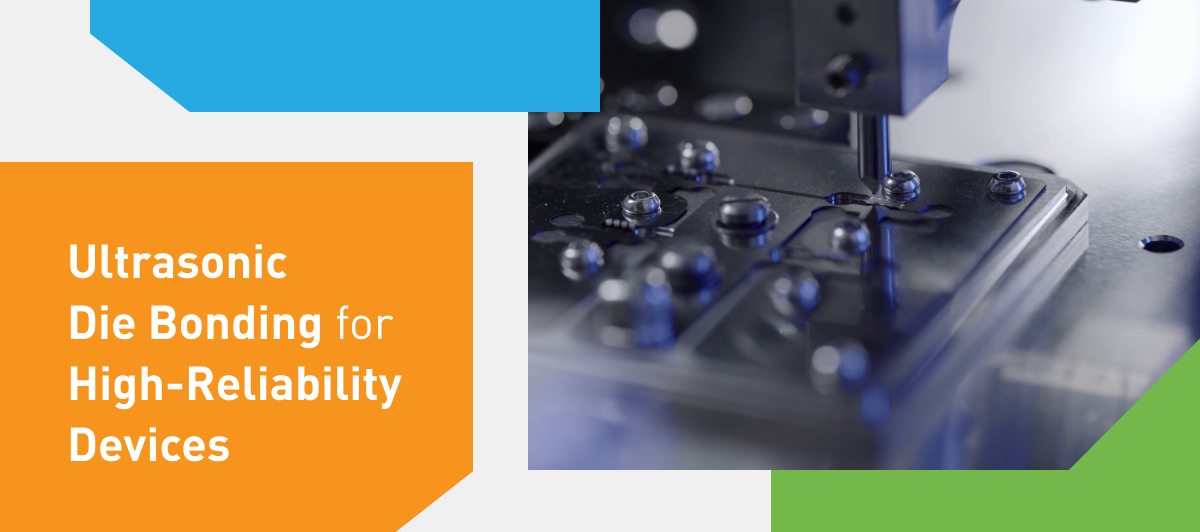
Across electronics and photonics, devices are becoming smaller, more sensitive and built from increasingly diverse materials. At the same time, production teams are scaling up automation and looking for bonding methods that deliver consistent results without unnecessary thermal or chemical stress. In this environment, ultrasonic die bonding has gained new relevance. It offers a combination of speed, cleanliness and reliability that supports both advanced device requirements and modern manufacturing expectations.
Although the technology has been used for years, its importance is growing because thermal budgets are shrinking, device materials are evolving and many applications now operate in demanding or long-lifetime environments.
Why Ultrasonic Die Bonding Matters Today
Several trends explain why more manufacturers are evaluating ultrasonic bonding for critical die attach steps.
- Many modern devices cannot tolerate high bonding temperatures. This includes photonic components, micro-LEDs, MEMS structures and cryogenic or quantum devices. Ultrasonic bonding keeps thermal exposure exceptionally low.
- Material combinations are becoming more complex. Packages often combine silicon, III-V compounds, ceramics and metals. Ultrasonic bonding avoids many compatibility constraints seen in other die-attach methods.
- Cleanliness directly influences performance. Optical, RF and sensing devices are sensitive to residues or volatile compounds. A dry metallic interface contributes to long-term stability.
- Automated production benefits from predictable bonding behavior. Ultrasonic processes generate short, measurable and repeatable bond events that fit naturally into automated handling and inline inspection.
- Many applications must survive harsh conditions. Aerospace, defense, industrial sensing and automotive LiDAR place high mechanical and thermal loads on assemblies. Gold-to-gold ultrasonic bonds are very stable under vibration, shock and temperature cycling.
These drivers show why ultrasonic die attach is moving beyond niche use and becoming part of broader manufacturing strategies.
Why It Matters for Manufacturing
Ultrasonic bonding takes its place alongside other die-attach methods such as thermocompression or adhesive-based processes. What makes it attractive in production is that it reduces process interaction, removes several auxiliary steps and delivers a bond event that is both fast and repeatable.
From a manufacturing perspective, this means:
- Very short bond times that support higher throughput
- Stable process signatures that integrate smoothly into automated workflows
- Reduced variation compared to high-temperature or adhesive processes
- A simpler bonding step with fewer external dependencies
- Straightforward transfer of developed recipes into production
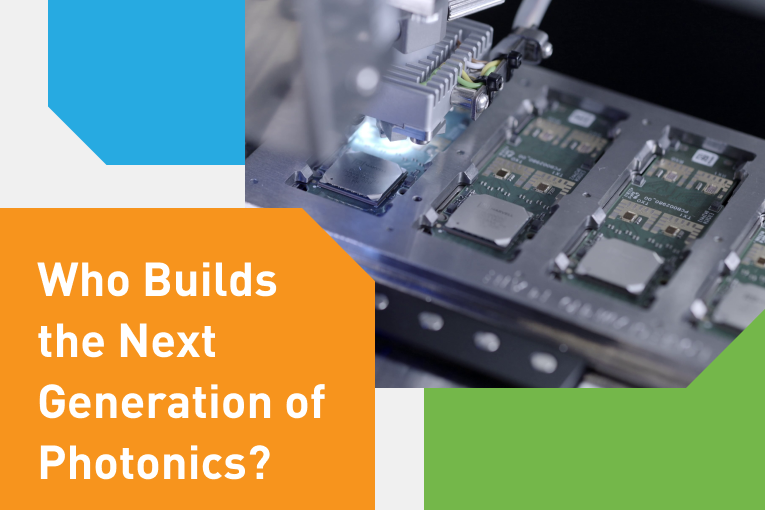
For small or delicate dies, maintaining flat and level handling before bonding is essential. Finetech uses handling concepts that ensure each die is properly aligned and leveled before the ultrasonic pulse, contributing to consistent bond-line thickness and co-planarity.
Finetech systems can also integrate plasma pre-cleaning, which improves surface preparation and helps maintain long-term bond stability. Production teams can further streamline their workflow using standardized substrate carriers that allow components to be pre-kitted, pre-aligned or plasma-cleaned in batches and supplied efficiently to the bonding area.
When required, post-bond measurements can be used to automatically correct small offsets in subsequent placements. This keeps accuracy consistent over long runs and supports stable, automated production.
How the Process Works
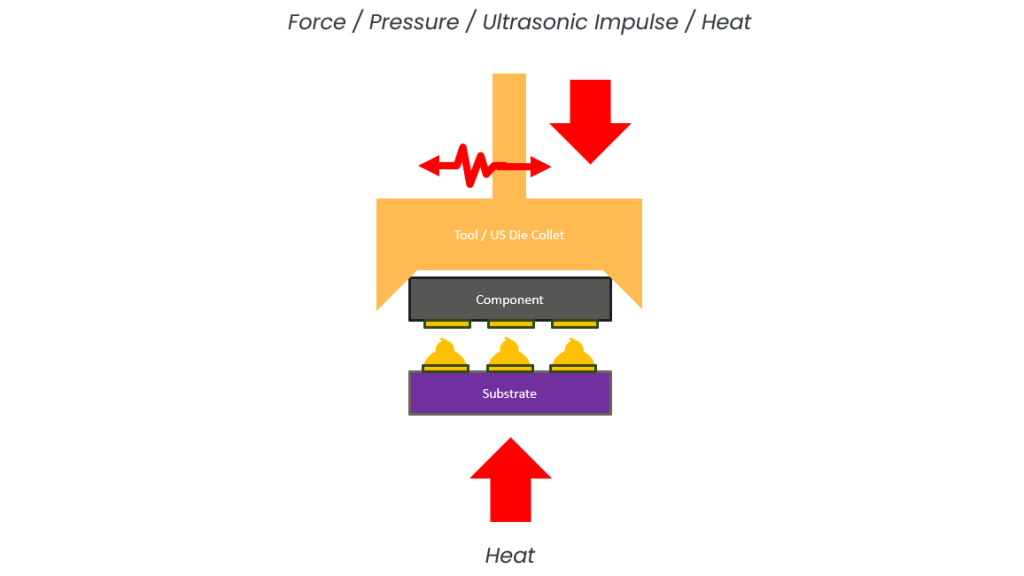
The principle of ultrasonic bonding is straightforward. The die is aligned and placed onto the substrate with a defined force. High-frequency vibration creates microscopic lateral movement at the interface. This breaks surface films and allows localized deformation, forming a clean, solid-state bond in milliseconds.
Optional substrate heating can reduce required force and shorten the cycle time, but temperatures remain far below those used in typical thermocompression.
During the ultrasonic pulse, gold bumps can collapse rapidly. Finetech incorporates mechanical solutions that keep the applied force stable through this moment, ensuring the die remains in controlled contact throughout the bond formation.
No solder, polymers or adhesives are required.
Where Ultrasonic Die Bonding Delivers Value
Because of these characteristics, ultrasonic bonding is used across a wide range of applications.
- Photonics and optoelectronics, where low heat and clean interfaces support device performance
- MEMS and sensors, which require gentle attachment to protect fragile structures
- RF and microwave devices, which benefit from stable metallic interfaces
- Power and hybrid electronics, where die-attach stability under temperature cycling is crucial
- Defense and aerospace systems that depend on long-term mechanical robustness
- Cryogenic and quantum devices that require extremely low heat and contamination-free assembly
Even under the dynamic conditions of ultrasonic bonding, Finetech platforms maintain high placement accuracy and stable bond-line results. In typical ultrasonic applications, post-bond accuracies around four microns are achievable in production environments, which is essential for many of these advanced applications.
How Finetech Implements the Process
Finetech integrates ultrasonic bonding within a modular platform concept designed for development and production alike.
- High-accuracy alignment and rigid mechanics ensure that placement remains stable even during ultrasonic excitation and bump collapse.
- Tailored tooling and die collets protect sensitive components, ensure flat contact surfaces and support consistent bump deformation. Certain collet designs can include an integrated coining surface, which gently pre-flattens gold bumps before bonding to create a uniform interface and reduce handling steps.
- All process parameters are fully adjustable, including force, ultrasonic power, pulse timing and optional heating, enabling stable recipes that can move from R&D to series production.
- Plasma pre-cleaning can be added when surface preparation is critical for bond quality.
- The modular architecture allows ultrasonic bonding to be combined with eutectic, thermocompression, adhesive or laser-assisted processes as needed.
This flexibility makes it easy to begin with early prototypes and scale confidently into automated production.
Conclusion
As devices continue to evolve and reliability requirements become more demanding, ultrasonic die bonding offers a clean, low-temperature and consistent way to create high-quality interconnects. The method aligns well with the needs of photonics, sensing, communication, defense and quantum applications, while also supporting stable and scalable manufacturing.
With precise motion control, adaptable tooling, optional plasma pre-cleaning and predictable process behavior, Finetech provides a platform that supports ultrasonic bonding from early development all the way to repeatable, efficient production.