
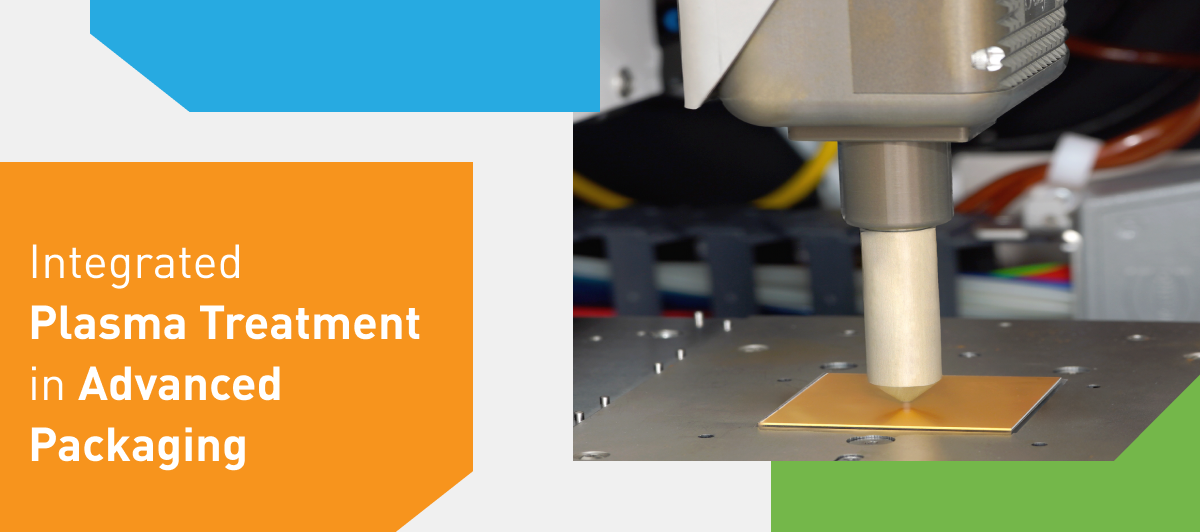
Is bond quality decided before bonding even begins?
In many advanced packaging processes, the limiting factor is not placement accuracy, force, or temperature. It is the condition of the bonding interface. Invisible residues, native oxides, or brief exposure to air can weaken a bond long before electrical testing reveals a problem.
As device architectures and material stacks grow more complex, surface preparation has become a decisive element in achieving stable, repeatable bonding results.
The Invisible Risk at the Bond Interface
Advanced packaging relies on clean, chemically stable interfaces. Even microscopic contamination can undermine bond quality and lead to:
- Voids at the bonding interface
- Delamination during thermal cycling
- Unstable electrical behavior
- Early device failure
Conventional cleaning methods are often no longer sufficient. Plasma treatment has therefore become a foundational step in modern die bonding workflows.
What Plasma Treatment Changes
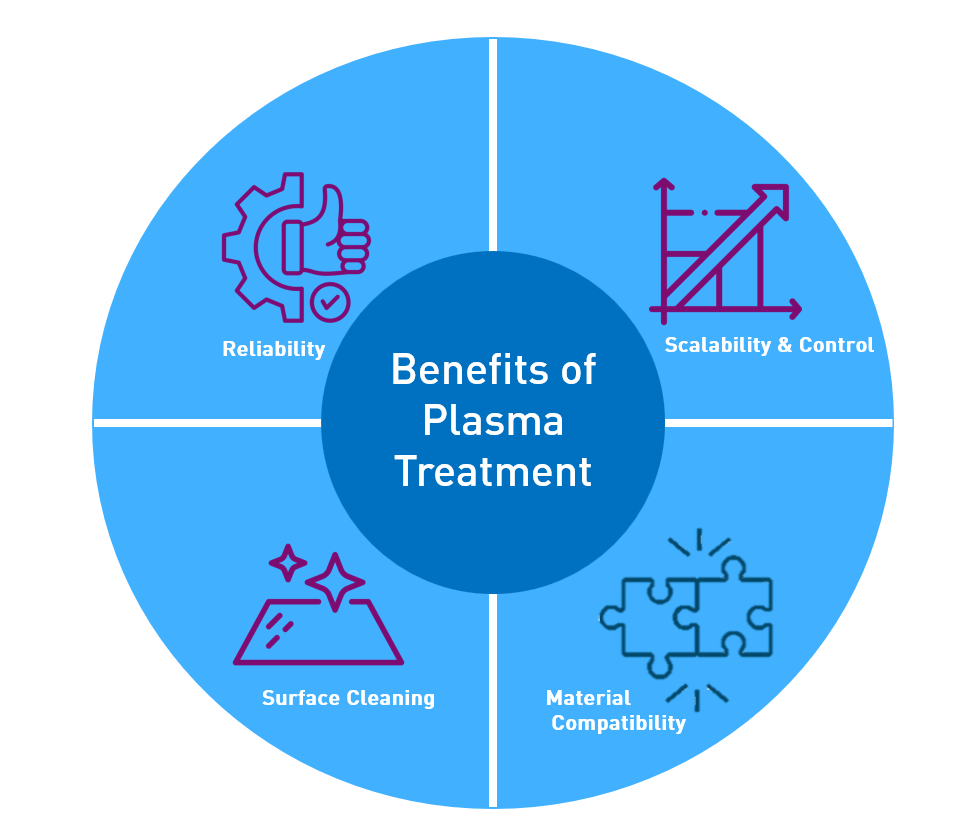
Plasma treatment modifies surfaces at the molecular level. It removes unwanted residues and activates the surface for bonding.
Plasma treatment:
- Removes hydrocarbons and organic residues
- Reduces native oxides
- Increases surface energy and wettability
- Creates chemically active, bond-ready interfaces
The result is stronger bonds, lower variability, and more stable processes from prototyping to production.
Before and After: Why Plasma Matters
Before plasma treatment, surfaces are highly sensitive. Small variations in contamination or oxide thickness can lead to inconsistent results.
After plasma treatment:
- Adhesion improves
- Variability drops
- Long-term reliability increases
These effects are essential for a range of demanding advanced packaging processes.
Why Atmospheric Argon Plasma?
Not all plasma sources are suitable for sensitive semiconductor surfaces. Incorrect chemistry or energy levels can damage materials instead of preparing them.
Finetech uses a patented atmospheric Argon plasma technology designed for advanced packaging applications.
Argon provides:
- Low ionization voltage
- A uniform, electrically neutral glow plasma
- Low process temperatures around 70 °C
This avoids:
- Arcing and ESD risk
- Ion bombardment and particle generation
- Excessive UV exposure and thermal damage
Compared with air or nitrogen plasmas, Argon prevents turbulence, hot spots, and NOx formation. Compared with vacuum plasma systems, it eliminates pump-down time and avoids surface bombardment.
Controlled Chemistries for Different Materials
Argon also acts as a stable carrier gas for controlled chemistries:
- ArO2 for organic removal and improved wettability
- ArH2 for reducing metal oxides on copper, tin, or indium
These chemistries allow multiple bonding applications to be supported on a single platform without hardware changes.
Why Integration Inside the Die Bonder Matters
Surface quality degrades quickly after preparation. Even short air exposure can cause recontamination, which is critical for hybrid and direct bonding.
Integrating plasma directly into the die bonder:
- Eliminates transport between tools
- Removes waiting time before bonding
- Minimizes recontamination risk
Plasma treatment takes place immediately before bonding under controlled conditions.
Plasma Treatment Module for the FINEPLACER® femto Platform
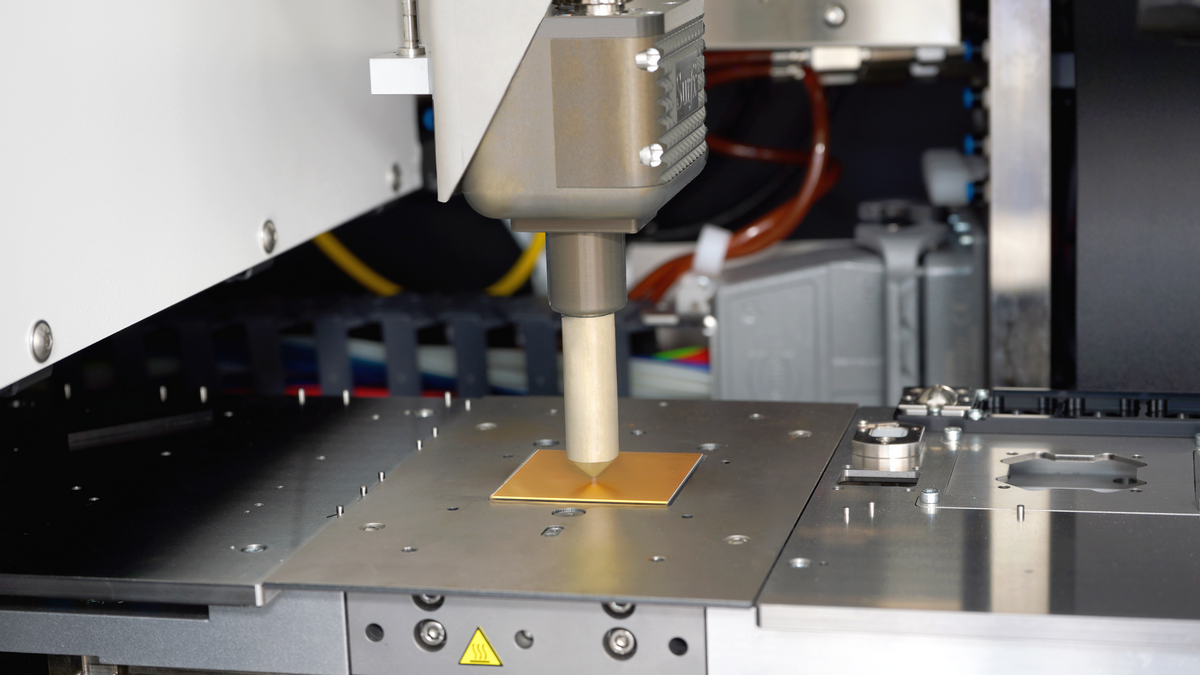
The Plasma Treatment Module integrates atmospheric Argon plasma directly into the FINEPLACER® femto die bonding platform.
It includes:
- An integrated plasma head
- Plasma and handling control units
- Full IPM software integration with preset recipes
Key characteristics:
- 12 MHz RF operation
- Up to 180 W RF power
- 10 mm active plasma spot
This supports die-level and wafer-level applications and makes plasma treatment part of the bonding recipe.
Efficiency and Process Stability
Integrated plasma simplifies workflows and reduces equipment overhead.
Benefits include:
- Fewer tools in the cleanroom
- No external vacuum systems or nitrogen cabinets
- Reduced handling steps and cycle time
- Improved traceability and repeatability
- Consistent results across shifts and sites
This supports smooth scaling from feasibility studies to production.
Example: Conditioning GaAs Laser Facets
GaAs laser facets are highly sensitive to contamination and native oxides.
Before plasma treatment:
- Optical output was unstable
- Leakage currents were elevated
A controlled multi-step plasma sequence using O2, H2, and N2:
- Removed organic residues
- Reduced oxides
- Formed a thin passivation layer
After plasma treatment:
- Optical power stability improved
- Leakage currents dropped
- Damage thresholds increased
The same principles apply to VCSELs and Photonic Integrated Circuits.
Where Plasma Treatment Makes the Difference
Plasma treatment improves outcomes across:
One surface preparation approach supports multiple advanced packaging workflows.
Conclusion: Bonding Starts at the Surface
Is bond quality decided before bonding even begins?
Yes. In advanced packaging, bond quality is determined at the interface long before force and temperature are applied. Surface condition governs whether a bond forms reliably, repeats consistently, and remains stable over time.
By integrating atmospheric Argon plasma directly into the FINEPLACER® femto platform, surface preparation becomes part of the die bonding process itself. Critical interfaces are stabilized immediately before bonding, variability is reduced, and process conditions remain controlled. Bonding no longer starts with force and temperature. It starts with a prepared interface.