A patient who can no longer speak generates text directly from neural activity. A patient with paralysis controls a cursor using thought alone.
Behind demonstrations like these is a difficult engineering problem: how do you assemble electronics delicate enough to interact with the human brain, while keeping them stable inside the body for years?
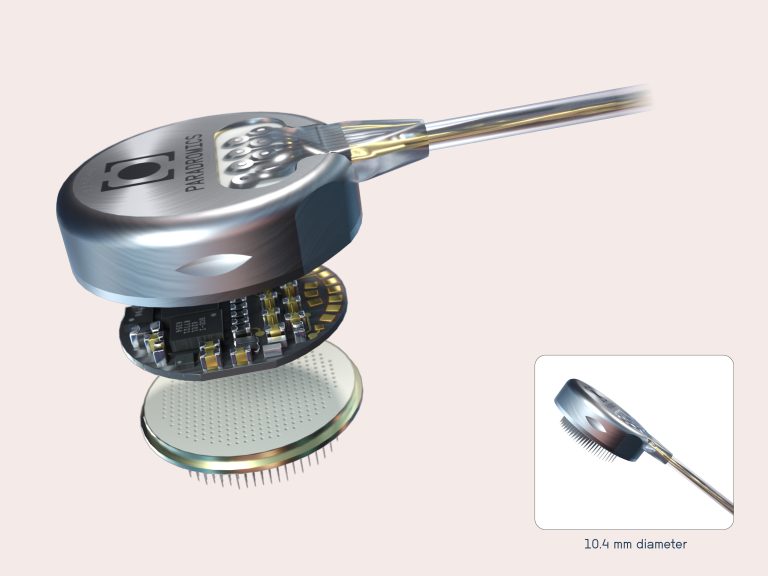
Implantable Brain-computer interfaces (BCIs) are moving steadily from research labs toward real medical applications. Companies such as Neuralink, Paradromics, Synchron, and China-based Neuracle are developing implantable systems designed to connect electronics directly with the nervous system.
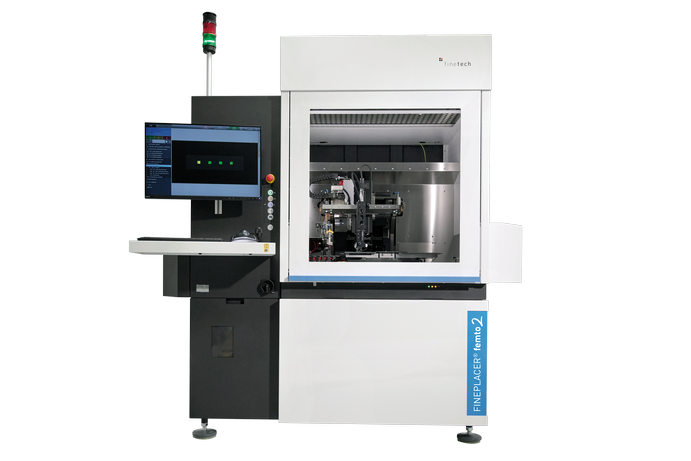
BCIs are a good example of an application where Finetech’s technological capabilities can make a difference. Bringing together miniaturized electronics, delicate substrates, and fine interconnect structures requires highly precise, controlled, and adaptable assembly processes, especially as these systems move from research toward practical medical use.
One early example was the CANDO project, a joint research initiative of the University of Newcastle developing optogenetic brain implants for epilepsy treatment, assembling µLED components below 100 µm onto optrode substrates, with 0.5-micron placement accuracy and custom tooling for biocompatible soldering. The experience made clear early on what this application domain requires: not just precision, but the ability to adapt processes across a development cycle where materials, geometries, and bonding methods change continuously.
Today, we see researchers working on systems that could:
- restore communication for patients who can no longer speak
- help paralysis patients interact with digital devices
- improve control of advanced prosthetics
- support treatment of neurological conditions such as epilepsy or Parkinson’s disease
Even relatively simple digital interaction can make a meaningful difference for people who have lost the ability to communicate or move independently.
As the technology progresses, the challenge is no longer only to interpret neural signals more accurately. Implant systems must also withstand long-term use inside the body, creating growing demand for precise, stable, and adaptable bonding processes.

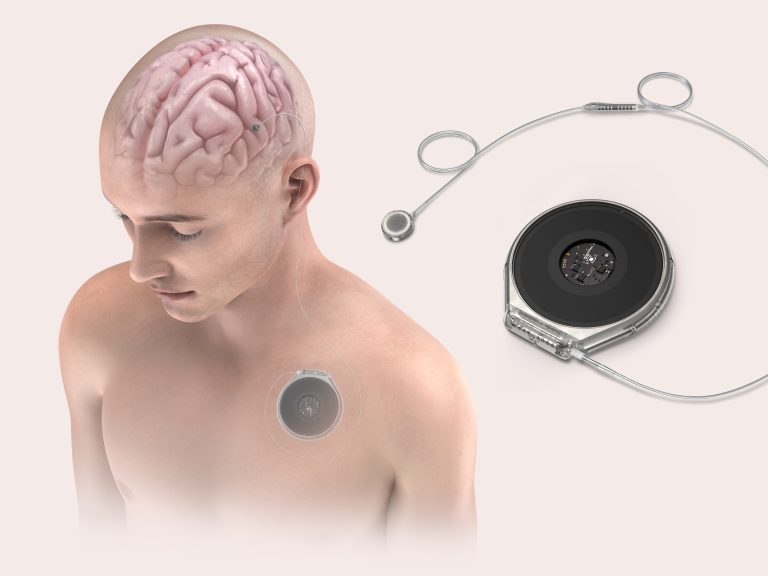 ® BCI: Cortical modules record neural signals, while a pectoral implant provides wireless power and high-bandwidth data transmission. Credit: Paradromics, Inc." srcset="https://finetech-china.com/wp-content/uploads/2026/06/2.-Paradromics-System-Medical-Illustration-1-of-2-768x576.jpg 768w, https://finetech-china.com/wp-content/uploads/2026/06/2.-Paradromics-System-Medical-Illustration-1-of-2-300x225.jpg 300w, https://finetech-china.com/wp-content/uploads/2026/06/2.-Paradromics-System-Medical-Illustration-1-of-2-1024x768.jpg 1024w, https://finetech-china.com/wp-content/uploads/2026/06/2.-Paradromics-System-Medical-Illustration-1-of-2-150x113.jpg 150w, https://finetech-china.com/wp-content/uploads/2026/06/2.-Paradromics-System-Medical-Illustration-1-of-2-1536x1152.jpg 1536w, https://finetech-china.com/wp-content/uploads/2026/06/2.-Paradromics-System-Medical-Illustration-1-of-2-2048x1536.jpg 2048w" sizes="(max-width: 768px) 100vw, 768px" />